Help buyers understand when your product fits their needs before another option earns the next conversation. Start with the comparisons, constraints and jobs they ask about, then publish clear evidence that lets them assess the choice. A comparison page can support that decision; it cannot guarantee a ChatGPT recommendation.
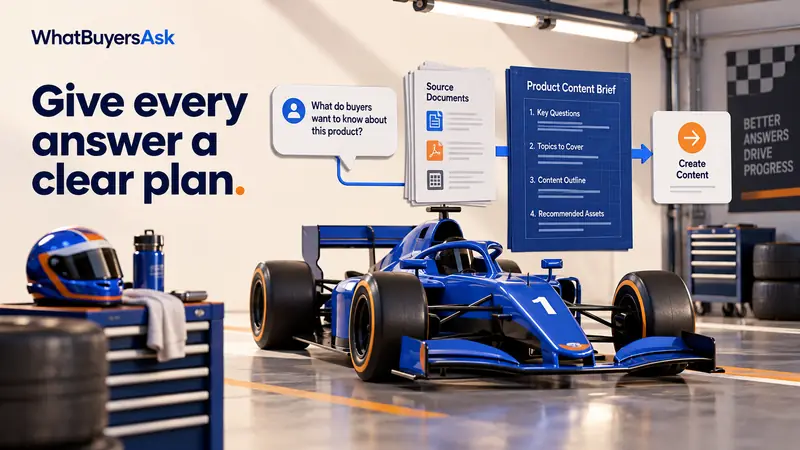
For an agency or product team, the useful question is specific: which important buying decision is difficult to answer from the current site? That is a stronger brief than “write more content for AI.” It connects the work to the enquiry, trial or product evaluation you want to earn.
Does ChatGPT recommend products?
It can suggest products in response to a question. Inspect the actual answer, conditions and sources before calling the suggestion a meaningful endorsement. A product named among alternatives is different from a direct recommendation for a particular team.
Use questions that reflect the buyer's decision. “A form tool for a small agency that needs scored responses” tests a different need from “alternatives to [named competitor].” Record those groups separately. Naming your own product in a question checks recognition and comparison, rather than discovery without a supplied brand.
Which buyer questions deserve attention?
Start with sales calls, onboarding questions, support themes and reasons customers gave for switching. Keep each source's provenance. A complaint on a competitor review page is one person's account, not proof that every customer faces that problem.
Illustrative prompts include “Which tools support [job] within [budget]?”, “What are the limits of [product] for [team]?” and “[Product A] versus [Product B] for [use case].” Adapt the conditions to real features and current plans. Do not invent demand for a topic because it would be convenient to publish.
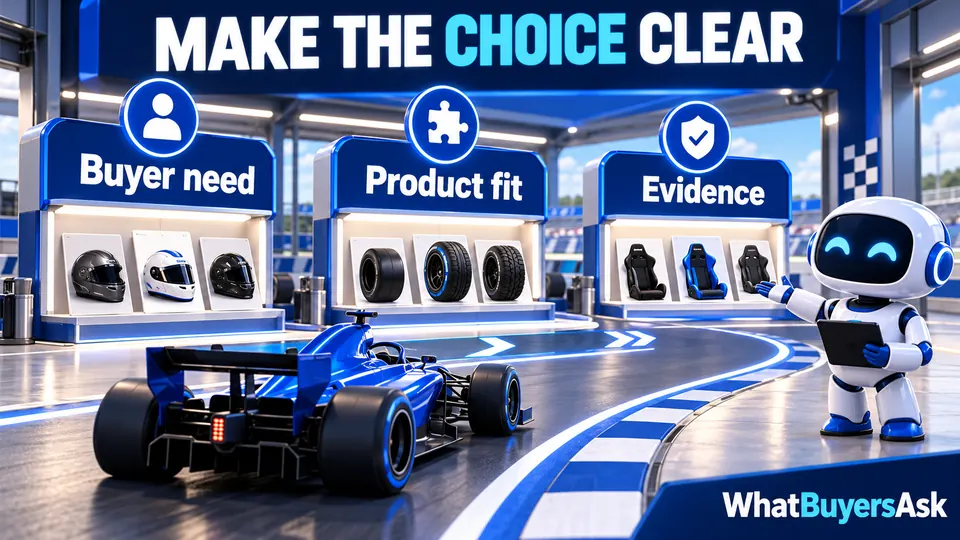
Make the choice clear: Buyer need, Product fit, Evidence.
What makes a useful comparison page?
Give the buyer the practical choice early. Explain which needs each product serves, what was compared, when facts were checked and who wrote the page. If you are the vendor or its agency, disclose that relationship. A reader should be able to verify the important claims without relying on your enthusiasm.
A comparison brief should include:
- The specific job and type of buyer being compared.
- Current plans, limits and price conditions, with source links and a check date.
- Features that matter to that job, including relevant limitations of your own product.
- A fair explanation of when another option may fit better.
- The next step a buyer can take to verify fit, such as documentation, a demonstration or a trial where actually available.
Use real HTML text and an accessible table when the information is genuinely parallel. Keep evidence and qualifications close to the claim. A screenshot of a comparison is harder to update, search and read with assistive technology than ordinary page content.
Do comparison pages make AI mention a product more often?
There is no guaranteed result. Judge the page against the decision it was created to support. Save the relevant questions and answers before changing it, then repeat the same checks. Look at source selection and enquiry quality as well as mentions.
A page being cited does not establish that the product was recommended. A new recommendation does not establish that the page caused it. Several sources, product changes and search conditions may have changed together. Keep the evidence strong enough for the claim you intend to make.
What is a use-case page?
It explains how the product helps someone complete a particular job. Show the workflow, prerequisites, limitations and output using accurate examples. A small team evaluating lead qualification needs a different explanation from a developer checking integration behaviour.
Group related questions into one useful page or section when they share the same decision. Create separate pages where the buyer need, evidence and action are distinct. Publishing a near-duplicate page for every phrasing creates maintenance work without necessarily helping a buyer.
Do third-party reviews and lists matter?
They may appear in the answers you observe. Open the exact pages and check whether they support the claims about your product. Keep legitimate review profiles and public product facts current. Use a publisher's normal correction process for a factual error.
Treat a paid placement as a commercial decision with a disclosed relationship. Do not fabricate user reviews or publish a supposedly independent list that secretly ranks your product first. The FTC's endorsement guidance explains why clear material-connection disclosures matter.
Can AI read the product pages?
Check the public response and visible facts before rewriting them. A comparison page that initially returns only a loading message may present a different experience to a fetcher from the one a buyer sees in a browser. Our access-check guide explains the separate checks.
How should we measure the work?
Keep a fixed question set covering discovery, comparison, cost and fit. Save full answers with service or actual API model, date, conditions and source links. Retest on a planned schedule, recording unavailable checks separately. A small sample is useful for inspection but does not establish a stable market-wide position.
Then review recorded AI visits in GA4, the landing pages and relevant enquiry or trial actions. Ask new customers what they were trying to solve. Those details help improve the page even when attribution is incomplete.
Can we guarantee a recommendation?
No. Promise the work you can inspect: accurate information, fair comparisons, saved evidence and a useful next test. Avoid a guaranteed placement or revenue claim.
Should we publish a “best tools” list?
Only if it helps the reader make a fair choice and the method and relationships are clear. A self-awarded first place is weak evidence for a sceptical buyer.
How long will it take to appear?
There is no dependable deadline. Record when the page changed and compare later observations under the same scope. Do not turn one founder's reported success into a promised timetable.
Is a citation the same as a sale?
No. Track mention, supporting citation, recommendation, visit and business outcome separately. A useful report shows what each observation can establish.
How can WhatBuyersAsk help?
It helps agencies choose 40 critical questions for the agreed client scope, examine saved answers and evidence, and identify useful content gaps. Relevant comparisons and client-supplied important questions can shape the brief, with their provenance kept visible.
Start with the decision that matters to the next qualified buyer. Read the research process, create your workspace, or sign in to continue.