A prospective client may arrive with an AI answer already shaping what they expect. A law firm's best response is to understand the question, have a qualified lawyer check the assumptions and explain the next step clearly. That can make the first conversation more useful before a competing firm earns the instruction.
For the marketing team, this is a research and communication task. Find the questions people ask before contacting the firm, identify inaccurate public information and prepare explanations approved for the firm's jurisdiction. A marketing article should not decide a person's legal rights or predict the outcome of their matter.
Are people using AI before contacting lawyers?
Some prospects will tell you they have. Ask about their own research rather than making an unsupported claim about everyone in the market. A simple intake question can reveal whether the person saw a chatbot answer, a directory, a firm's article or a recommendation from someone they trust.
Try: “Did you read anything or use an AI assistant before contacting us? Which question were you trying to answer?” Make the question optional and follow the firm's confidentiality and data-handling procedures. Do not require a person to paste sensitive documents into a public chat to explain their concern.
Is an AI legal answer accurate for a particular client?
A qualified lawyer needs the relevant facts, jurisdiction and current law before advising. A general answer may omit a condition, rely on a different jurisdiction or sound more certain than its sources justify. The marketing team should identify questions for review, rather than certify the answer itself.
The ABA's guidance on finding a lawyer is a useful reference for the professional-help stage. For published service content, identify who reviews it and the jurisdiction it addresses. Explain how a consultation works without promising eligibility, compensation or a particular result.
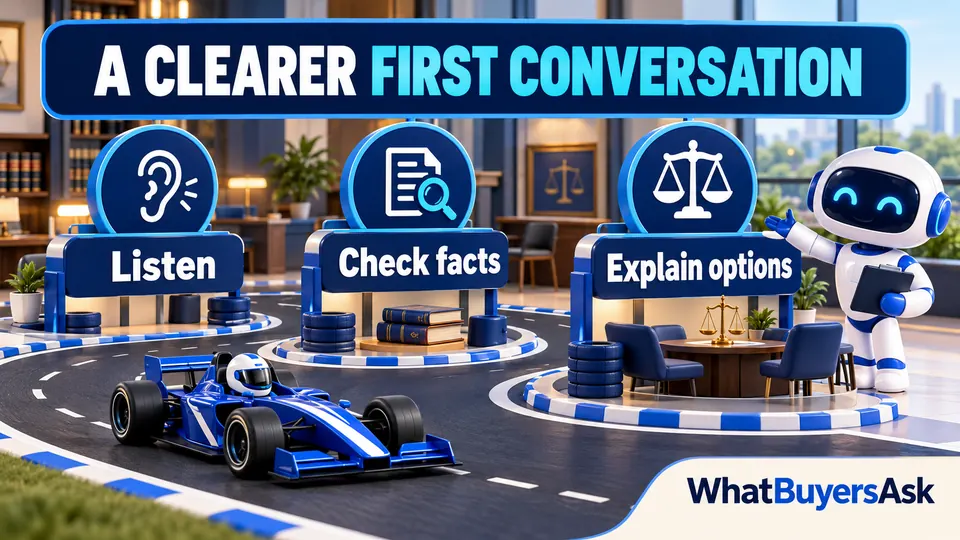
A clearer first conversation: Listen, Check facts, Explain options.
How do we find what prospects are asking?
Collect recurring wording from approved intake notes, reception calls and questions the legal team is comfortable using in anonymised form. Keep private case facts outside a public content brief. Separate an actual observed question from an illustrative prompt written by a marketer.
Build a manageable starter set around the firm's real services. Examples might include what a first consultation involves, how fees are explained, what information a person should bring and how to check a lawyer's credentials. Where a question involves rights, deadlines or a likely result, assign it to the relevant lawyer for review.
Keep the question list and intended jurisdiction fixed for a comparison. Save the assistant, exact wording, date, full answer and sources. Ask the legal reviewer to distinguish wrong facts, missing qualifications and statements that cannot be assessed from the information available.
How do we correct wrong information about the firm?
Start with a factual record: the incorrect statement, where it appeared, the source cited and the correct public evidence. Check the firm's website, professional register, directory profiles and contact details. Correct the source you control through its normal process, and keep evidence of the change.
Then retest. One corrected profile will not necessarily update every assistant immediately. If a source remains wrong, use the publisher's correction process. Do not promise a client that a new article can erase an answer from every AI system.
What should a useful answer page contain?
Give the reader the practical point early, followed by the facts and qualifications they need. Explain the service, jurisdiction, consultation process, price factors where appropriate and what the firm needs before it can give advice. Show the real author or reviewer and a meaningful review date.
A helpful page might explain what to bring to an initial consultation, what the first meeting covers and which factors the lawyer will need to examine. Use approved, genuinely anonymised examples only when they add understanding. Check professional advertising rules before discussing past results, comparisons or testimonials.
Link the explanation to an appropriate contact route. Ask only for information needed at that stage. A person who understands the next step can make a better informed enquiry; a vague “contact us” under a page of generic reassurance creates more work for intake staff.
How should the lawyer respond when a client quotes a chatbot?
Use the answer to understand the concern. A calm opening could be: “It helps to know what you have read. Let's check which facts and rules apply to your situation.” The lawyer can then identify missing facts and explain what they need to assess the matter.
Marketing staff should not supply an expected outcome or fee range they have not been authorised to state. The firm's approved consultation process should determine how the answer is reviewed, what is recorded and when legal advice begins.
How often should we review these questions?
Choose a repeatable schedule and add an earlier review when public information, a service or the relevant law changes. Keep the same questions for the comparable part of the test. Record new questions separately so a changing question set does not look like a change in visibility.
For the partners' report, show three things: recurring prospect questions, the exact public information changed and the next review needed. Keep marketing exposure, suitable enquiries and signed instructions distinct. A mention in an AI answer cannot establish that an additional case was won.
Can ChatGPT replace advice from our lawyer?
A general answer should not be used to decide a person's matter. Explain the purpose of a consultation and let the qualified lawyer assess the facts and jurisdiction.
What are intake questions?
They are the firm's questions for understanding a new enquiry. An optional question about prior online or AI research can reveal expectations, provided the firm handles the response through its approved process.
Can we publish what AI often gets wrong?
Only after verifying the examples and obtaining the appropriate legal review. Correct a specific misunderstanding calmly, identify the applicable jurisdiction and avoid turning a general explanation into individual advice.
How do we get AI tools to stop repeating old information?
Correct authoritative public sources, document the date and retest. There is no universal switch or guaranteed refresh timetable. Preserve uncertain results rather than claiming a correction reached every system.
How can an agency use WhatBuyersAsk for a law firm?
Use the research to organise buyer questions and inspect saved answers, source evidence and competing explanations. The legal team remains responsible for reviewing legal content and the firm's claims. The personal injury guide offers an example of decision questions without predicting a case outcome.
Make the next consultation easier to begin with questions the firm can answer responsibly. Review the WhatBuyersAsk research process, create your agency workspace, or sign in for an existing client.