A prospective client may compare law firms before contacting any of them. They can ask an AI assistant whether a lawyer is relevant to their situation, how fees work or who handles similar matters locally. If your client's website leaves those questions unanswered, another firm may become the easier place to start.
For an agency, the useful work is to help the firm explain its service accurately. A person should understand which matters the firm considers, what a consultation involves and how the lawyer discusses fees and expenses. Clear information can lead to better informed enquiries while giving the intake team fewer avoidable misunderstandings to resolve.
The question patterns in the supplied guide reveal uncertainty about the decision itself. Someone may wonder whether a minor collision justifies contacting a lawyer, whether paying for repairs resolves every issue or whether a fee arrangement leaves them better off. These questions need lawyer-reviewed explanations that recognise the facts and jurisdiction involved.
Use example prompts like these to begin an agency research exercise:
- What should I ask a personal injury lawyer in [town] before deciding whether to hire them?
- How does this firm's contingency fee work, including expenses and what happens if the case is unsuccessful?
- What information should I bring to a first consultation about a car accident?
- How can I check the lawyer's licence, experience and areas of practice?
- Which firms serving [town] clearly explain their consultation process and the types of matters they consider?
Extend the set with questions about a lower proposed fee, who would handle the matter and how the firm communicates progress. Questions about signing a release, ongoing symptoms, filing deadlines or the effect of accepting money should lead to qualified, jurisdiction-specific guidance. A marketing page should not decide an individual's legal rights or predict their recovery.
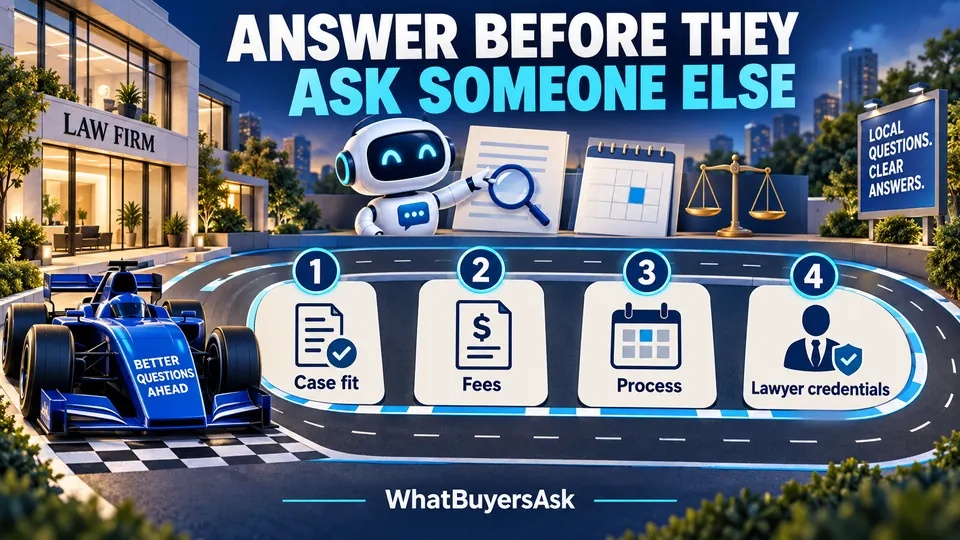
Answer before they ask someone else: case fit, fees, process and lawyer credentials.
A useful fee page explains the firm's actual agreement, including the basis of the fee, expenses, possible changes at later stages and the circumstances the lawyer needs to discuss. Do not label a percentage “normal” for every client or imply that “no fee” always means no costs. The American Bar Association's consumer guidance encourages people to consider experience and fees and understand which services and expenses are included.
Make the consultation process concrete. Explain who receives the enquiry, which general information is requested and how the next step is arranged. State consultation charges or availability only when the firm confirms them. Keep a secure intake route easy to find so prospective clients do not put sensitive details in a public comment or review.
Support the firm's identity with current lawyer biographies, relevant admissions, practice areas and appropriate verification links. Review published results and testimonials under the applicable advertising rules, with permission where needed. Describe the facts and context accurately rather than suggesting that an earlier result predicts another person's outcome.
Review the Google Business Profile using Google's business guidelines: use the actual firm or practitioner identity, accurate categories, hours and location. Then reconcile existing professional and directory profiles with the website. An old office, former lawyer or incorrect practice area can create confusion at the point of enquiry.
For a first manual baseline, ask the five prompts in three relevant services, such as ChatGPT, Perplexity and an available Google AI search experience. Save each full answer with the service, date, time, market and sources. Record whether the firm is named, whether a source links to it and whether the stated details are supported. Keep a directory citation separate from a recommendation of a particular lawyer.
The first pass provides up to 15 observations. Mark unavailable answers separately and repeat the same questions before drawing a trend. BrightLocal's local AI study observed changes across repeated searches and locations. When a competitor appears, inspect the source and reason given; a single answer cannot establish why the firm was omitted.
Turn the baseline into a practical month of improvements:
- Week one: save the observations and correct the firm's contact, office, practitioner and practice area details.
- Week two: have a lawyer review the fee, consultation and explanations of case fit that prospective clients need most.
- Week three: publish approved improvements beside the appropriate intake route, with accurate credentials and permitted supporting evidence.
- Week four: repeat the fixed prompts and review suitable enquiries and consultations with the firm. Keep legal outcomes separate from marketing visibility.
If the firm requests reviews, use a neutral invitation approved under the relevant professional rules. Google's review policy prohibits incentives and selective positive-review requests. Keep confidential client or matter information out of public replies.
If one AI service names the firm, will the others do the same?
Do not assume so. Save observations separately for each service, question and date. An answer from one service does not establish coverage elsewhere.
Why might a competitor's result be cited?
Inspect the exact source. The page may contain information relevant to that question, but the citation alone does not prove that a larger result or more aggressive claim will improve the firm's visibility.
How do we address incorrect facts about the firm?
Save the claim and source, correct the relevant public record or owned profile and retest later. Keep a clear record for the firm's review rather than assuming one correction reaches every service immediately.
Can the agency promise that AI will send more cases?
No. Useful explanations can support better enquiries, but neither source selection nor signed matters are guaranteed. Google's AI search guidance also makes clear that eligibility does not guarantee inclusion.
Can we check whether AI bots can reach the website?
Use the public AI bot reachability checker. If WBA CLI is installed, run wba https://example.com, replacing the example with the client's public website. It checks access, bot instructions and readable page text without a login or research credits. It does not measure whether the business is mentioned or recommended.
How can WhatBuyersAsk help our agency?
WhatBuyersAsk uses a library of buyer question patterns to select 40 critical questions around the client's business, including costs, alternatives, comparisons and trust. The research helps you inspect answers, competitors and gaps before deciding which pages deserve attention. Read how the research process works and review the proposed scope for your client.
Can we keep the questions fixed for a retest?
Keep the agreed wording, market and question version with the baseline, and compare later observations against that same set. If you add questions, report them separately so a changing denominator does not look like an improvement. The portal's raw research download lets you retain saved answers and available scores with their provenance; unavailable evidence should remain visible as unavailable.
Create your agency workspace to turn your client's unanswered questions into a clear research brief and a next step supported by evidence. Existing customers can sign in. Start with the questions that stand between the next enquiry and the next competitor.