Check whether the relevant search service can reach your page before paying to rewrite it. A useful answer behind a login screen or a blocked request cannot serve the same purpose as a public page a prospective buyer can open and assess.
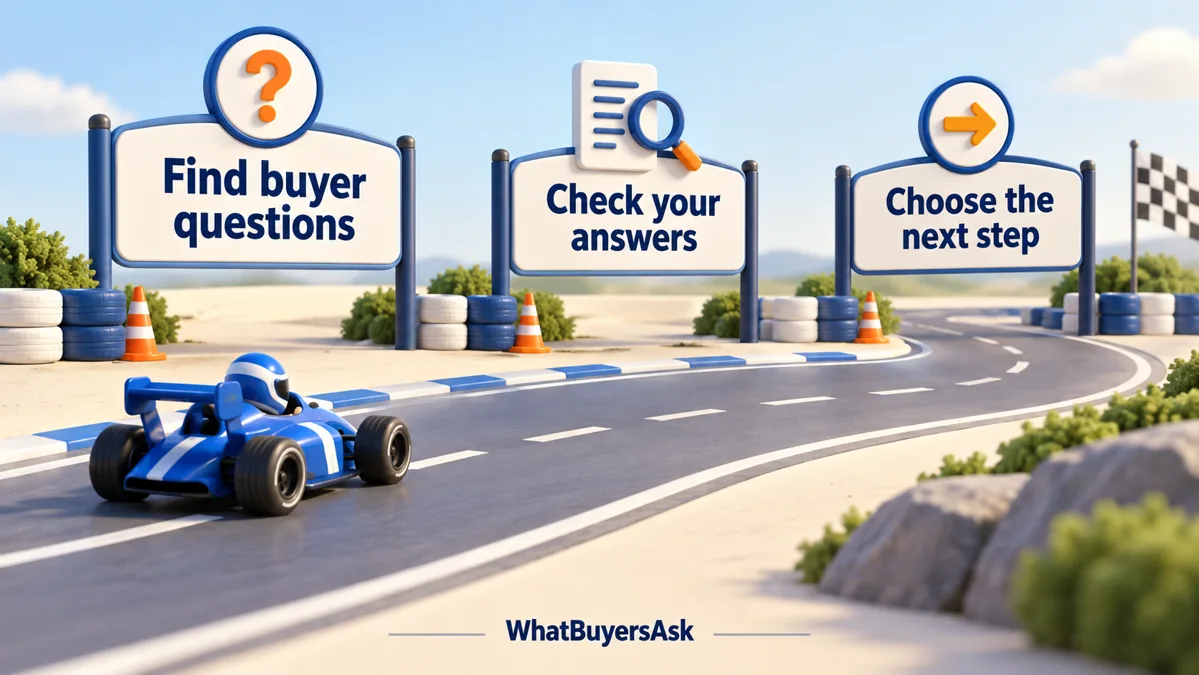
Start with the response from the page, then inspect the content a visitor can read. A successful status code can still return a challenge page or an empty application shell. Review relevant server logs and firewall events so you can distinguish missing information from a blocked page.
Read robots.txt alongside your security rules. A crawler may be allowed by robots.txt and still receive a forbidden response from a firewall. Conversely, allowing requests at the network layer does not override the crawler instructions you publish. Keep these decisions consistent with your business's security and content policy.
OpenAI documents different purposes for OAI-SearchBot and GPTBot: search and potential training. Review its crawler documentation when choosing which access to allow. Perplexity publishes crawler and firewall guidance for its services. Granting access does not guarantee a citation or recommendation.
A request with a crawler's name in the user-agent string is a useful diagnostic, but it does not prove the genuine search robot can reach the page. That name can be copied. Use the provider's verification guidance and published network information when checking identity or changing security rules. Avoid disabling your firewall broadly to solve one blocked route.
Check JavaScript with the actual retrieval path in mind. Google can process JavaScript under its documented conditions, as its search guidance explains. Other fetchers may process a page differently. Inspect both the initial response and the rendered page before claiming that a framework prevents visibility.
Make essential business information reliably available. A product page should let a visitor read the relevant specifications, availability and purchasing conditions. A service page should explain scope, location and the factors that affect a quote. Keep internal links and preferred page addresses sensible so the intended page is easy to discover.
When a whitepaper requires a form, consider publishing a useful public summary. Explain the main findings, method and limitations so a reader can judge whether to request the full document. Keep the access decision tied to the value of the asset and the purpose of collecting the lead.
After a change, repeat the relevant checks and record the result. A removed block shows improved access. It does not establish that a search service has indexed the page or that an assistant will cite it. Once access works, use an answer gap review to assess whether the page gives a buyer enough information to continue.
Can I check this without technical skills?
Open the page in a private browser window and see whether its main information is available without signing in. Ask your website provider to check access logs, crawler rules and firewall blocks for the remaining checks.
Does allowing a crawler guarantee a mention?
No. Access makes retrieval possible. The service still decides what to retrieve and use.
How can WhatBuyersAsk help after the access check?
Use answer gap analysis to review whether an accessible page answers the buyer question. Your website provider should handle security settings and technical access repairs.
Find the buyer questions your website leaves unanswered. Bring one important product or service to the conversation so the next step stays focused on your business.