Your next patient could compare practices before anyone calls reception. When someone asks an AI assistant about sedation costs, a veneer quote or who treats jaw pain locally, a clear competing answer can put another practice on their shortlist. Help your dental client explain the questions behind that decision while the patient is still choosing.
For an agency, this creates a useful conversation beyond rankings: which patient concerns does the practice answer well, which facts are difficult to verify, and what should the team improve next? The aim is a better informed enquiry from someone who understands what the practice offers.
Cost is only part of the decision. A patient considering sedation may want to understand the assessment, the available options, the arrangements for an anxious patient and what happens before an estimate is agreed. Someone comparing veneers may ask about alternatives, maintenance, the number of teeth involved and the full treatment plan. Jaw pain questions can involve several professionals, so the content needs careful clinical review.
Use these example prompts as a starting point, adapting them to the practice's real enquiries and location:
- How much does IV sedation cost at a dentist in [town], and what does the estimate include?
- What should an anxious patient ask about IV, oral and nitrous sedation before booking?
- How do I find a professional near [town] who can assess jaw pain and explain the options?
- How much does a smile makeover with veneers cost in [town], and what alternatives should I discuss?
- Does my insurance cover the proposed sedation or jaw treatment, and who can confirm my benefits?
Extend the list with the concerns staff hear every week. Is a large treatment package necessary? When is a second opinion useful? Who assesses whether physical therapy, a splint or another approach is appropriate? What are the limits and risks of a proposed treatment? These are questions for qualified professionals to address on the practice's pages. They should never be turned into blanket treatment recommendations by a marketing team. The NIDCR's TMD information is a useful starting reference for clinician review of jaw pain content.
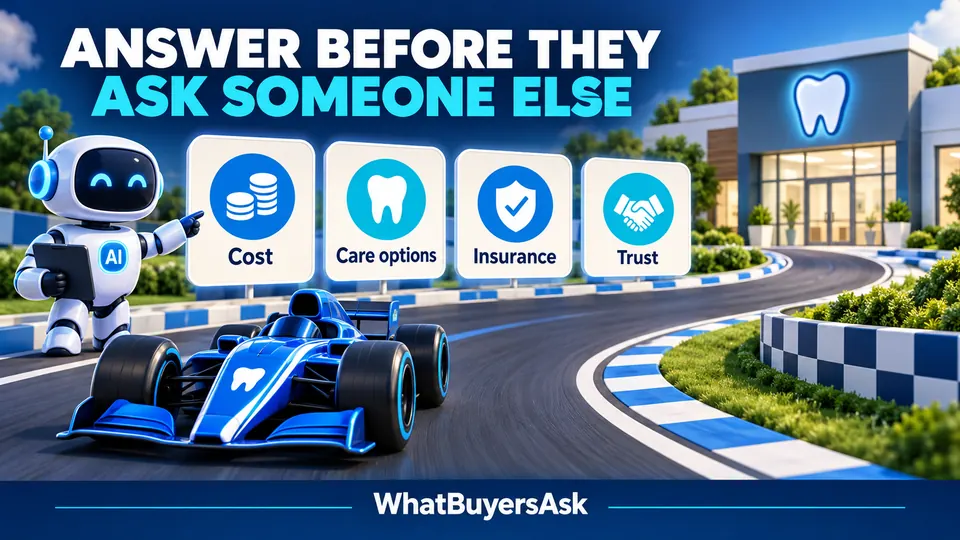
Answer before they ask someone else: cost, care options, insurance and trust.
An answer becomes useful when it gives the patient a sensible next step. For a cost question, explain what is assessed before an estimate, which items are included and how the practice checks insurance information. For an anxiety question, explain how a patient can discuss their concerns before committing to an appointment. For a cosmetic question, identify the clinician who reviews options and the information the consultation provides.
Keep the evidence close to the answer. Make the practice address, current hours, appointment route, clinician names and actual services easy to find. Give each important service a useful page with accurate information, reviewed by the appropriate clinician. An old insurance list or a vague claim about being a specialist can undermine an otherwise strong enquiry.
Audit the Google Business Profile against Google's business guidelines: use the real practice name, accurate categories, hours and location. Then review relevant professional profiles, such as ADA Find-a-Dentist or Healthgrades, where the practice is eligible and listed. Prioritise sources that appear in the answers you observe; a directory listing is no promise of an AI recommendation.
For a first manual check, try the five prompts above in three relevant services, such as ChatGPT, Perplexity and a Google AI search experience available in your market. Keep the town and wording fixed. Save the full answer, service, date, time and cited links. Note whether the practice is named, whether its website is cited and whether its details are correct. Record a missing answer or unavailable AI Overview separately from a usable answer that omitted the practice.
That gives you up to 15 observations for an initial snapshot. Repeat the same questions before presenting a trend. BrightLocal's local AI study observed changes across repeated searches and locations; one answer cannot establish a stable position. Check what a cited source actually says before turning a competitor mention into a content task.
Turn the findings into four weeks of useful work:
- Week one: save the baseline and correct obvious errors in contact details, services, appointment information and practitioner profiles.
- Week two: ask the clinical team to review the most important unanswered questions. Draft clear explanations of costs, assessment and options using the practice's real policies.
- Week three: publish the approved answers beside the relevant service and booking links. Check that the important text is readable on a phone and available in the page itself.
- Week four: repeat the fixed prompts and review qualified enquiries with the practice. Keep a record of what changed, rather than attributing every new appointment to an AI mention.
Invite honest feedback with a neutral request such as: “Thank you for visiting us. If you would like to share your experience, you can leave a review here: [review link].” Follow Google's review policy. Keep public replies general and avoid discussing a patient's treatment or personal details.
Why can another practice appear even if we have more reviews?
Review count alone does not explain an observed answer. Compare the question, sources, service detail and location. Look for information the other practice makes easier to verify before deciding what to change.
How do we correct a wrong insurance or service claim?
Save the answer and its sources. Correct the relevant website or profile, keep the practice's own information consistent and retest later. Editing one chat response does not update the public sources other people may encounter.
Can a page promise that AI will recommend the practice?
No. Useful information can support discovery and patient understanding, but it cannot guarantee selection. Google's AI search guidance describes eligibility without guaranteeing inclusion.
What should the agency report to the practice?
Show the questions tested, the answers saved, factual errors found and actions completed. Track appointment enquiries and their quality separately so the practice can judge whether the work helps its business.
Can we check whether AI bots can reach the website?
Use the public AI bot reachability checker. If WBA CLI is installed, run wba https://example.com, replacing the example with the client's public website. It checks access, bot instructions and readable page text without a login or research credits. It does not measure whether the business is mentioned or recommended.
How can WhatBuyersAsk help our agency?
WhatBuyersAsk uses a library of buyer question patterns to select 40 critical questions around the client's business, including costs, alternatives, comparisons and trust. The research helps you inspect answers, competitors and gaps before deciding which pages deserve attention. Read how the research process works and review the proposed scope for your client.
Can we keep the questions fixed for a retest?
Keep the agreed wording, market and question version with the baseline, and compare later observations against that same set. If you add questions, report them separately so a changing denominator does not look like an improvement. The portal's raw research download lets you retain saved answers and available scores with their provenance; unavailable evidence should remain visible as unavailable.
Create your agency workspace to turn your client's unanswered questions into a clear research brief and a next step supported by evidence. Existing customers can sign in. Start with the questions that stand between the next enquiry and the next competitor.