Your plumbing client can lose an enquiry while the homeowner is still checking the quote. Someone comparing a water heater replacement may ask an AI assistant what should be included, whether a tankless option suits the home or which local company explains its charges clearly. An unanswered concern gives a competitor another chance to earn the call.
Help the plumber make the next decision easier. A homeowner should be able to understand the assessment, the cost of a visit, the work included and how to contact the team. That can bring the sales conversation closer to a specific job instead of starting with avoidable doubt.
The supplied question patterns centre on expensive surprises and trust. A replacement quote may include a unit, labour, access work, venting, permits, removal and changes required after inspection. A simple price comparison becomes misleading when the scope differs. Clear information gives a prospective customer a better basis for asking for an estimate.
Use these example prompts to begin a local check:
- How much does water heater replacement cost in [town], and what changes the estimate?
- How do I find a trustworthy plumber serving [town]?
- What should I compare between a local independent plumber and a larger plumbing company?
- What should an itemised water heater quote include, including permits and removal where needed?
- Which plumbers serving [town] explain their emergency callout fee and availability before dispatch?
Extend the list with questions about tank versus tankless systems, planned replacement versus waiting for a failure, warranties and who carries out the work. Ask the business which questions cause customers to hesitate or abandon a quote. Those conversations provide stronger page priorities than repeating “best plumber” across several town pages.
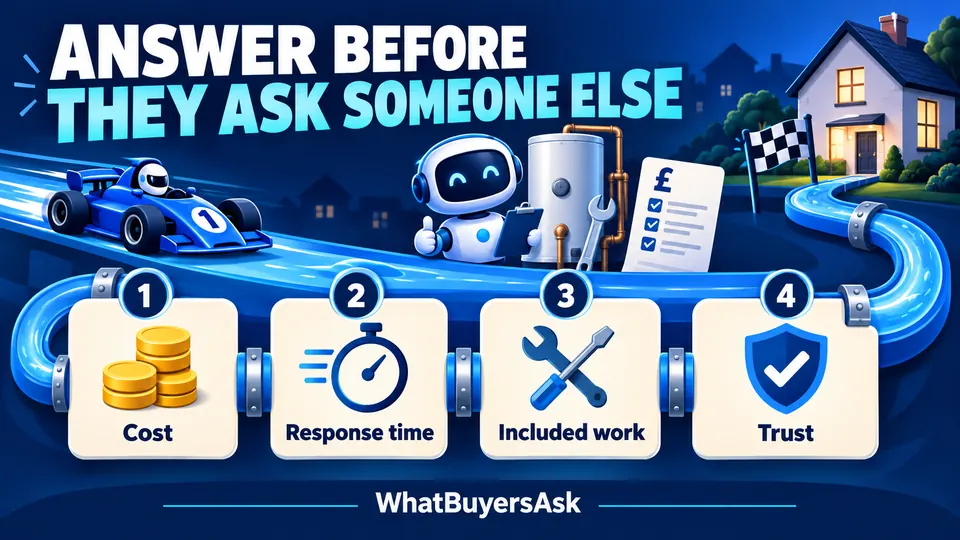
Answer before they ask someone else: cost, response time, included work and trust.
A useful water heater page explains what happens before a price is confirmed. Describe how the plumber assesses the existing setup, what the written estimate includes and how additional work is authorised. Explain which product and labour warranties apply. Have the technical team review the details; do not present a generic online answer as an assessment of a particular installation.
Emergency pages need an equally clear promise. State the real service hours, the areas covered, the dispatch process and how any visit or after-hours charge is explained. Avoid promising an arrival time the team cannot consistently meet. Make the phone number and booking action easy to use on a small screen so a person with an urgent problem can act quickly.
Give customers a way to check the business. Publish relevant licence information where applicable, who supplies the work and how to contact the company after a job. Genuine project photos and clear terms can support those details. Avoid calling a competitor dishonest simply because their quote has a different scope.
Review the Google Business Profile under Google's business guidelines: use accurate categories, hours and service areas, with address visibility suited to the business. Reconcile existing directory information with the company's own website. Choose additional listings based on relevance and the sources you observe in local answers, rather than assuming more profiles will produce more calls.
For an initial manual baseline, ask the five prompts in three relevant services, such as ChatGPT, Perplexity and a Google AI search experience available locally. Keep the exact wording and location. Save the full answer, service, date, time and sources. Note whether the plumber is named, whether the website is linked and whether charges or services are described accurately.
The first pass produces up to 15 observations. Mark unavailable answers separately and repeat the same prompts before presenting a trend. BrightLocal's local AI study observed changes across repeated searches and locations. A single omission is a reason to investigate, rather than proof that a website rewrite will fix it.
Use a month of work to connect the findings with better enquiries:
- Week one: record the baseline and correct contact details, coverage areas and opening hours.
- Week two: publish a quote explainer and clear information about visit charges, emergency availability and how estimates are approved.
- Week three: improve the most valuable service pages with accurate details and real examples of the work the team provides.
- Week four: repeat the fixed question set and compare qualified calls, estimates requested and jobs accepted alongside the saved AI answers.
A neutral review request is enough: “Thank you for choosing us. If you would like to share your experience, you can leave a review here: [review link].” Follow Google's review policy and let the customer choose what to say.
Should a plumber put prices on the website?
When the business can keep them accurate, prices and well-defined ranges can help customers assess fit. State what is included and which conditions change the estimate. Otherwise explain the assessment and quotation process clearly.
Why might an AI answer cite a directory instead of our site?
The service may have selected that directory as a source for the particular question. Inspect the page it cited and check the company's information there. One citation does not show that the website has no value.
Will a new website guarantee recommendations?
No. Helpful pages and working access support discovery, but source selection varies. Google's AI search guidance does not require special AI files or promise inclusion.
What should the owner see in the agency report?
Show the question set, saved answers, factual errors, page changes and business outcomes tracked. Separate visibility observations from the calls and jobs that can actually be attributed to the work.
Can we check whether AI bots can reach the website?
Use the public AI bot reachability checker. If WBA CLI is installed, run wba https://example.com, replacing the example with the client's public website. It checks access, bot instructions and readable page text without a login or research credits. It does not measure whether the business is mentioned or recommended.
How can WhatBuyersAsk help our agency?
WhatBuyersAsk uses a library of buyer question patterns to select 40 critical questions around the client's business, including costs, alternatives, comparisons and trust. The research helps you inspect answers, competitors and gaps before deciding which pages deserve attention. Read how the research process works and review the proposed scope for your client.
Can we keep the questions fixed for a retest?
Keep the agreed wording, market and question version with the baseline, and compare later observations against that same set. If you add questions, report them separately so a changing denominator does not look like an improvement. The portal's raw research download lets you retain saved answers and available scores with their provenance; unavailable evidence should remain visible as unavailable.
Create your agency workspace to turn your client's unanswered questions into a clear research brief and a next step supported by evidence. Existing customers can sign in. Start with the questions that stand between the next enquiry and the next competitor.